Detect relapse early.
Unlock the next course.
Most patients who relapse never come back — and you never see it coming. Emobot is the passive between-visit signal that catches the drift early and nudges them back to your clinic.
r=0.89
MADRS correlation
4.0×
Net ROI · internal
+$6–11k
per recaptured patient

Active patients
Patient #47
TMS · Wk 6
48
Patient #31
Spravato · Wk 4
31
Patient #58
TMS · Wk 8
30
Patient #22
TMS · Wk 14
25
Patient #47
TMS · Week 6 · Enrolled 42 days
Depression Index
48
/100Mood evolution · 14d
Early signalActivity
4.2
k steps↓ 18% vs Wk4
Sleep
6h 12m
↓ 32min vs avg
Facial affect
−0.8
Flattening
Vocal energy
−12%
Lower tone
3-month mood calendar — Patient #47
Jan → AprValidated with academic partners






Trusted by interventional psychiatry clinics & networks





The patient-churn problem
Between visits, the clinic goes dark — and patients silently drift away.
IP treatments work. The leak is between visits, where today’s workflow has no tool that sees what happens. Roughly half of TRD patients relapse within 6–12 months of a successful course — and most of that is invisible until the patient stops showing up.
24%
of TMS patients never finish the acute course
Sackeim 2020 · NeuroStar Registry (n=1,753). Most drop-outs are silent — no red flag, just a patient who stops showing up.
37.5%
of TMS responders relapse within 12 months
Dunner 2014 · 42 US sites. Without continuous monitoring, most relapses are invisible until the patient is already lost.
79.6%
of Spravato patients discontinue within 12 months
ESKALE study, France. Only ~15% for adverse events; the rest is logistical drop-off and silent loss of response.
How it works
Install once. Bring patients back.
One 3-minute setup on the patient’s phone. Then Emobot does the rest — continuously, passively, with zero patient effort.
01
Patient installs app
3-minute onboarding. No wearables, no hardware.
02
AI monitors passively
Facial expression, voice, and activity, captured during natural phone use.
03
Patient gets nudged
When signals deteriorate, the app invites them to rebook — 48h before clinical signs appear.
04
Patient rebooks with you
They book in-app. You recapture the patient before they silently drop off.
What you give your patients
The patient app the clinic prescribes.
Three minutes to install. Then nothing. The app runs passively, shows the patient their own mood trend, and nudges them back to you when it dips. Built for depression, anxiety, and bipolar disorders.
Passive · zero burden
After a 3-minute setup, the patient does nothing. No check-ins, no surveys.
Empowering · they see their own trend
An objective graph of their own mental health. Awareness is what brings them back.
Safety net · a gentle nudge when something shifts
When the trend dips, a friendly notification — not an alarm — suggests a check-in.
 EmoDTx
Your wellness today
76
/100 · Feeling good
Today's signals
Mood
Facial
Voice
Vocal
Activity
Motion
Steps — 14 days
9,400 todayAll analysis on-device · Zero data transmitted
3-min setup
then passive
Monitoring active
Pooled validity · n = 45 · ASCP 2026
Emobot fills the gap between clinical assessments.
PHQ-9 is administered every 2 weeks. Emobot’s continuous signal shows the day-to-day variation between those points — the nuance a biweekly questionnaire can’t see.
Late-breaking poster: Perzo A., Sapko M.T., Petelot T., Séguier R., Javitt J.C. — Continuous Multimodal Passive Monitoring of Depressive Symptoms via Smartphone: Clinical Validation of EMOCARE. ASCP 2026 · American Society of Clinical Psychopharmacology (Emobot × NRx Pharmaceuticals × CentraleSupélec × Johns Hopkins). Read the poster →
MADRS rmCorr
r = 0.895
n = 45 · 3 studies · p = .016
HAM-D17 Spearman
ρ = 0.833
Concordance with clinician rating
PHQ-9 Δ sensitivity
ρ = 0.834
Sensitivity to change, Spearman
Competitive advantage
The only passive, multimodal, continuous monitoring platform.
Emobot is not a better survey tool. It is a different category entirely.
← scroll horizontally →
| Feature | Emobot | PHQ-9 by email | Voice-only tools |
|---|---|---|---|
| Data collection | ✓ Passive & multimodal (facial, vocal, actigraphy, behavior) | Subjective self-report | Active / voice-only |
| Frequency | ✓ Continuous (real-time) | Every 6–8 weeks | When prompted |
| Early detection | ✓ 48-hour lead time on relapse | Poor, reactive only | Poor, reactive only |
| Patient burden | ✓ Zero, install once | High, manual entry | Medium, active input |
| Patient activation | ✓ 75% (doctor recommended) | 30–40% email completion | Poor adherence |
| Clinical validation | ✓ r=0.89 MADRS, 10+ studies | Validated (subjective) | Limited validation |
Results that speak
150+ physicians.
4× net ROI.
Deployed across US interventional psychiatry clinics, in partnership with Hope Therapeutics (NRx Pharmaceuticals, Nasdaq: NRXP) and Radial Health (national IP network, $50M Series A / General Catalyst).
See the evidence →“Precision medicine requires real-time data to be effective. Emobot’s 100% passive, multimodal AI provides us with a continuous stream of objective biomarkers: effectively a ‘360-degree view’ of a patient’s emotional state. We believe this is the new gold standard for care; in fact, we expect every patient to be on Emobot.”
Dr. Jonathan Javitt, MD, MPH
Founder & CEO · Hope Therapeutics, sister of NRx Pharmaceuticals
“Emobot has become a key asset for us. Our entire staff is behind it and we’re actively bringing peer IP clinics into the platform. This is the data layer interventional psychiatry has been missing.”

Dr. Carlene MacMillan, MD, FCTMSS
Co-founder · Radial Health
“In clinical practice, we are always putting the scraps of limited information and patient’s self-report together trying to meaningfully assemble the trajectory of illness and how to best intervene with our modalities. Emobot will change our work! There should be no guess-work in diagnosis or in actual clinical course. What a hugely needed tool in our field that will enable patients to continuously track and observe their own clinical patterns with data. At Hope Therapeutics, we cannot wait to deliver more individualized, informed care.”
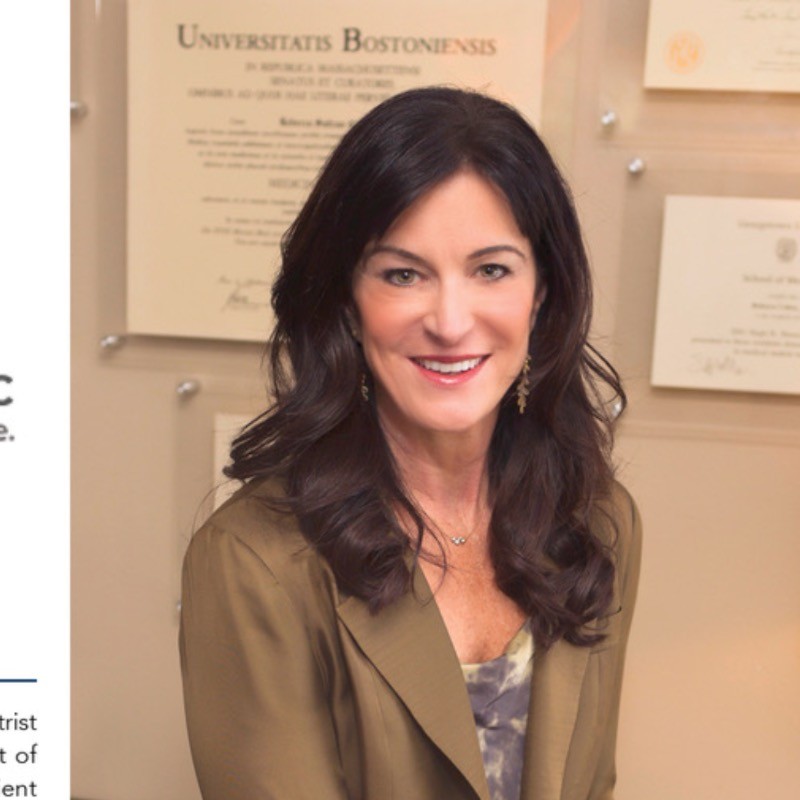
Dr. Rebecca Cohen, MD
Chief Medical Officer · Hope Therapeutics, sister of NRx Pharmaceuticals
Where to next
Stop the leak. Start with the path that fits.
Two audiences, two destinations. Or just book a demo and we’ll walk through your specific case in 30 minutes.
For IP clinics & networks
Recover the patients you’re losing today.
The full IP playbook: pricing, ROI math for self-pay vs reimbursed, deployment, security, and the clinical leaders who already deploy Emobot.
Open the clinic page →For patients
Become the master of your mental health.
What the app does, what your doctor sees, and how to ask your clinic to enroll you. 50-second video at the top of the page.
See the patient experience →Self-serve activation · Set up in minutes · Enroll your first patient the same day
Common questions
Everything you need to know
No sales call required to understand how this works.
What exactly does Emobot do?
Emobot passively monitors a patient's facial expression, mood, speech patterns, and physical activity, with zero active participation required after a 3-minute setup. It gives clinicians a continuous, objective view of patient wellbeing between visits, correlating at r=0.89 with the MADRS clinical scale.
Does it work for TMS and Esketamine (Spravato) clinics?
Yes. Emobot was specifically designed for interventional psychiatry clinics running TMS and Esketamine programs. The peer-reviewed registry data makes the case: 24% of TMS patients never finish the acute course (Sackeim 2020), 37.5% of responders relapse inside 12 months (Dunner 2014), and 79.6% of Spravato patients discontinue in the same window (ESKALE, France). Emobot detects early response, missed response, and early relapse signals in TRD patients up to 48 hours before clinical symptoms surface, then nudges the patient inside their own app to rebook with you.
Is patient data private and HIPAA compliant?
Yes. Emobot is designed for minimum data footprint. Facial analysis runs entirely on-device; raw video is never transmitted. Voice is processed on our servers in a 30-minute ephemeral window, then the recording is discarded and only the numerical emotion score is retained. Activity signals and location metrics are processed server-side and stored as numbers, not raw biometrics. All transmission uses TLS 1.3; storage uses AES-256 at rest. A Business Associate Agreement is available for US clinics.
How much burden does this add for patients?
Zero. Patients install the iPhone app once (3 minutes). After that, the monitoring is completely passive. No daily check-ins, no surveys, no habit changes required. 75% of patients activate when their doctor recommends it, compared to 30–40% for standard PHQ-9 email surveys.
How does Emobot integrate with our EHR?
No EHR integration is required. Clinicians access a standalone web dashboard at portal.emobothealth.com. Patient data is kept separate from your EHR to simplify compliance. There's nothing to install on your side; you access the dashboard from any browser.
What's the ROI for our clinic?
A typical IP clinic sees a 4× net ROI on internal cohort data (revenue recaptured minus Emobot cost, divided by Emobot cost). The primary driver is patient-churn recovery. For reimbursed clinics, each recaptured patient unlocks the next reimbursable course — a maintenance TMS course or Spravato booster — worth $6k–$11k that the payer funds, not the patient. For self-pay clinics, the mechanism is empowerment: patients see their own mood trend, get nudged when it dips, and come back sooner and more often, expanding LTV by 4–7×. The bigger return in both cases is clinical: re-treating early lifts sustained remission from ~70% to ~85%.